
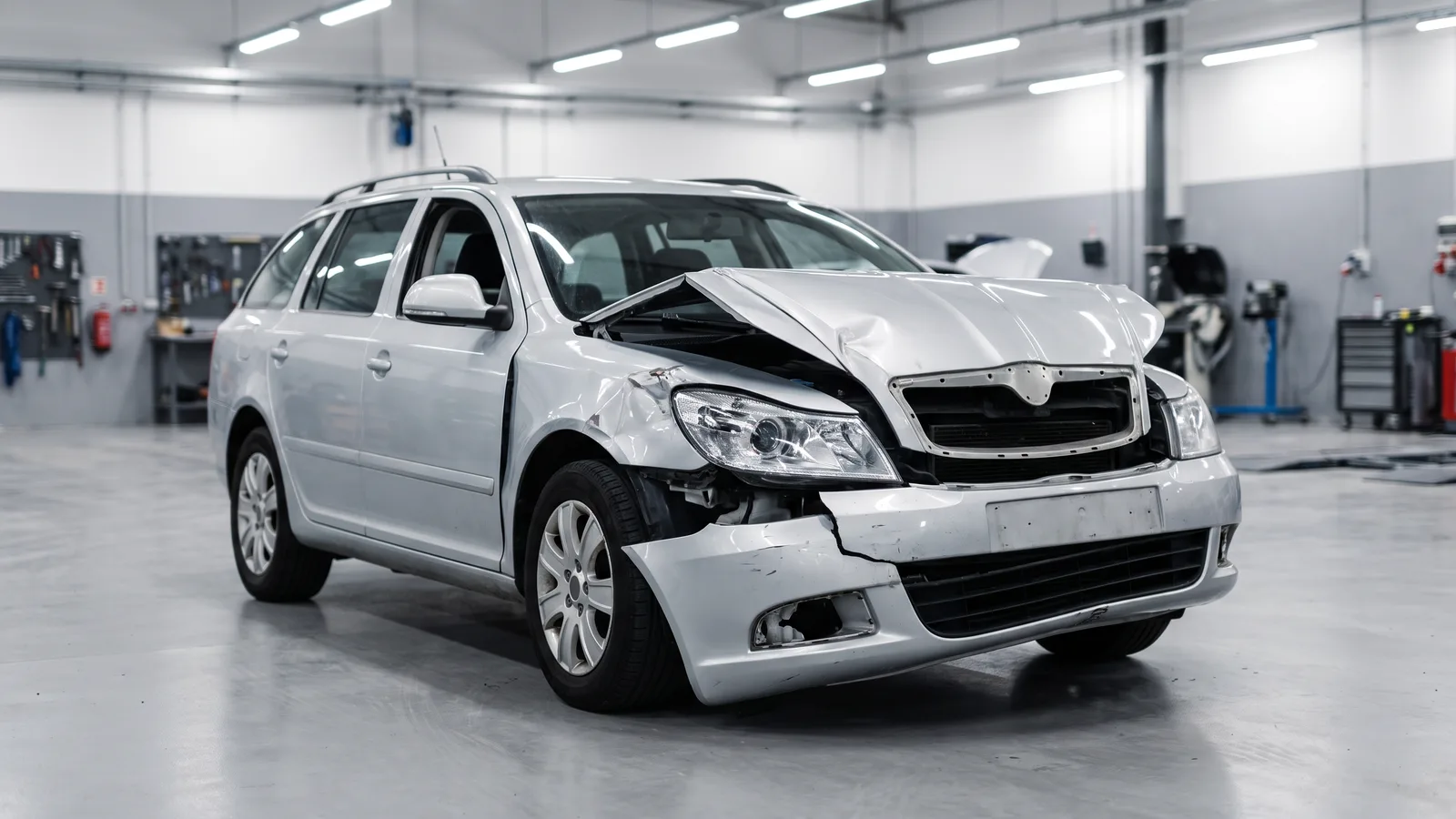
Your car is written off when the insurance company decides repairing it is not cost effective compared with what the vehicle is worth. You do not get it repaired. You get a cash settlement for its market value, the insurer takes the vehicle, and you are left replacing it with whatever that payout comes to.
That is the mechanism. What matters is the number, because the payout is the whole of what you get, and the first offer an insurer makes is often not the best figure available.
This guide is for drivers who have just been told their car is a total loss and want to know what happens next. It covers how the decision is made, what the write off categories mean, how the payout is calculated, how to challenge a settlement offer that looks low, where you stand if the car is on finance, and what you have to tell the DVLA. We are an accident repair centre in Birmingham, so the part we can speak to with authority is the repair estimate the whole decision rests on.
What a car write off actually means
A car write off is an accounting decision, not an engineering one. Nobody has declared your vehicle unrepairable. The insurer judges that paying for the repairs makes less financial sense than paying you out and taking the wreck.
When an insurer writes a car off it is effectively buying the wreck from you at its pre accident value. Insurers call it a total loss. The two phrases mean the same thing and you will see both on the paperwork for a written off car.
How the insurance company decides
Someone prices the repairs: parts, paint, labour, and the other costs that attach to a claim such as recovery and storage. That total cost is set against the car’s pre accident market value, and if the repair costs climb past a threshold the insurance company sets, the vehicle is written off.
Every insurer sets its own threshold and none of them publish it. In practice it sits well below 100%, and repair costs somewhere around 60% to 70% of the car’s market value are often enough to trigger a write off, because the insurer also accounts for what it can recover in salvage value and for the risk that stripping the vehicle uncovers more damage.
This is the part worth understanding: the decision turns on two numbers, and both can be wrong. An inflated repair estimate writes off a car that could have been saved. An undervalued vehicle does the same thing from the other direction.
How to tell if your car is a write off
You will not always be told quickly, and your car insurance policy will not spell out the threshold. The signs that an insurer is heading that way are a badly damaged shell rather than bolt-on panels, structural damage to the parts that absorb impact, flood damage, or an older vehicle with a current value in the low thousands and visible damage across several panels.
Two other things push a car towards a total loss regardless of whether the repairs are technically possible. Damage to safety systems, airbags, seatbelt pretensioners and the sensors behind them, is expensive and gets a car written off quickly. So does age or rarity: older and rare cars often face higher repair costs simply because the parts are hard to source, and a long wait for a panel adds storage to the bill.
Why your car insurance writes cars off sooner than you would expect
Because the sum is about money rather than about whether the repairs are possible.
A ten year old hatchback worth £2,000 does not need catastrophic damage to fail the test. A bent rear quarter, a door, paint across three panels and a week of storage will do it. The same damage on a three year old car worth £18,000 is a routine repair nobody would think twice about.
That is why two vehicles with almost identical damage get completely different answers, and why older cars are written off for damage their owners can see is repairable.
Car write off categories explained
UK insurance write offs are classified into four categories: A, B, S and N. Two of these write off categories allow a vehicle back on the road and two do not.
| Category | What it means | Back on the road? |
|---|---|---|
| Cat A | Scrap only, including every part | No. The whole vehicle must be crushed |
| Cat B | Break for parts, body shell destroyed | No. Parts may be salvaged, but never sold whole |
| Cat S | Structurally damaged, repairable | Yes, if properly repaired and re-registered |
| Cat N | Non structurally damaged, repairable | Yes. Faults are cosmetic, electrical or mechanical |
Category A and category B write off: the ones that cannot come back
A category A car must be crushed and cannot be repaired or have anything reclaimed from it. A category B write off can have its parts salvaged and reused, but the body shell has to be destroyed and the vehicle can never be sold or registered as a whole car again.
What category S and category N mean for a repairable car
A category S car is structurally damaged but repairable, which means damage to the chassis, subframe or crumple zones. A cat S vehicle can return to the road, but the repair has to be done properly because those are the parts that protect you next time.
A category N car is non structurally damaged and repairable. That does not automatically mean light damage, because brakes, steering and electrics all count as non structural, and a cat N vehicle can still be badly damaged.
Neither category S nor category N is unsafe once repaired correctly. Both carry the marker permanently, so a past write off shows up on any vehicle history check and a repaired write off is worth less than an equivalent car with clean history.
Category C and category D: the old system
Category C and category D were replaced in October 2017 by cat S and cat N. They still appear on a vehicle history check for anything written off before then, which is the only place you should now see these write off categories.
A category C car was repairable, but the repairs exceeded the car’s value. A category D car was repairable and the repairs themselves came to less than the car was worth, but the total cost once recovery, storage and the rest were added made it too expensive to repair. Broadly, category C maps to category S and category D to category N.
How is the value of a car written off decided?
By its market value the day before the accident. Not what you originally paid, not the outstanding balance on your finance, and not the cost of a new car to replace it.
Insurers price this using motor trade valuation guides and recent sales of similar vehicles, then adjust for mileage, condition, service history and specification. Your policy excess comes off the settlement figure if you are claiming on your own cover. On a car valued at £6,000 with a £250 excess, the payout is £5,750.
Why the first offer is often low
Because guides publish more than one figure. The motor trade section prices what a dealer would pay, which is lower than what you would pay to replace the car, and a settlement built on the wrong column starts low. Insurers may offer an initial payout below the car’s real market value, and many insurers treat the first figure as an opening position rather than a final one.
The Financial Ombudsman Service sees this often enough to publish guidance on it. Its position is that an insurer should not lean on guide prices alone where there is evidence the vehicle was worth more. Low mileage, full service history, a recent purchase at a higher price, desirable specification, or recent major work such as a clutch or cambelt can all push the full market value above the guide.
How to challenge the insurer’s valuation
You can negotiate for a higher insurance payout if the car has been undervalued, and you should if you think the figure is wrong. A settlement offer is an opening position, not a verdict. Here is the step by step guide.
- Ask how the figure was reached. Which guides, what mileage and condition were assumed, and what adjustments were applied.
- Check the assumptions. Insurers work from the information they have, so if they have assumed average condition on a vehicle in genuinely good order, say so.
- Provide evidence before you respond, because an argument without supporting evidence goes nowhere.
- Put your case in writing with the evidence attached, and ask for a revised offer.
- Escalate if you need to. The insurer’s own complaints process comes first, and the Financial Ombudsman Service after that. It is free to use.
That step by step guide works because the insurer has to justify its figure once you ask, and most initial valuations have an assumption in them that does not survive being checked.
What evidence actually works
Advertised prices for similar vehicles. Not asking prices you half remember, but live adverts for the same model, same age, similar mileage and similar specification, screenshotted with the date visible. Three or four similar cars make a far stronger case than one.
Alongside that, your own records: service history, receipts for recent work, MOT certificates showing the mileage, photographs of the car before the accident, and the purchase invoice. Provide evidence that is specific and checkable, because a vehicle bought three months ago for more than the insurer is offering is a difficult number for them to defend. Keep part exchange quotes out of it, since those price what a dealer would give you, not what the car is worth.
What if the written off car is on finance?
The insurance payout goes to the finance company first, because they own the vehicle until the finance agreement ends. Anything left over comes to you.
A write off does not automatically cancel your finance agreement. The car is gone; the contract is not. If the settlement figure is less than the outstanding balance you remain liable for the remaining balance, and the final payment is still due. Cars depreciate faster than a finance agreement pays down, particularly in the first two years, so it is common to owe money on a vehicle that no longer exists.
You must inform your finance provider as soon as the car is written off. They will issue a settlement fee figure, and the insurer usually deals with them directly.
Where gap insurance fits
Gap insurance exists to cover exactly that shortfall, paying the difference between the insurance payout and either the outstanding finance or the original purchase price, depending on the policy.
If you bought it, this is when it earns its money, so check before you accept anything. It is often sold at the point of purchase and then forgotten. We are a repairer rather than a financial adviser, so we will not tell you whether such a policy is worth buying, only that it is worth checking whether you already hold one.
Do you have to tell the DVLA?
Yes, and this one carries a penalty. You must notify the DVLA when a vehicle is written off. Your insurer will normally do it when they take ownership, but the obligation does not disappear because you assumed somebody else handled it, and failure to notify the DVLA can mean a fine of up to £1,000.
Check it has been done, and do it yourself if you are buying the car back or keeping any part of it.
Can you keep a written off vehicle?
Sometimes. If the car is category S or category N you can ask to buy the written off car back, and the insurer deducts the salvage value from your settlement.
Whether that makes sense depends on what the repairs would genuinely cost, which is a different question from what the insurer’s estimate said. Because a repaired write off carries a higher risk profile for the next buyer and sells for less, buying back works best when you intend to keep the vehicle. Cat A and cat B cars cannot be bought back.
How long does the insurance payout take?
Most claims settle within 14 to 30 working days once liability and valuation are both agreed. Neither of those is quick if either is in dispute.
Straightforward cases where fault is obvious and you accept the first offer move fastest. A disputed valuation adds however long the negotiation runs. Disputed liability adds longer, because nothing is settled until it is clear whose insurer is paying the claim.
If the other driver was at fault
The other driver’s insurance company pays the settlement, and no excess should be deducted. The same valuation arguments apply, and so does your right to challenge the figure.
You should also be given a replacement vehicle while the claim is settled, which matters more than usual in a total loss because you are not getting your own car back at the end of it. There is more in who pays for a non-fault accident repair.
Will a write off affect my no claims bonus?
If the accident was your fault, yes, in the same way any at-fault claim does. If it was not, and the other insurer accepts liability in full, your bonus should not be affected.
Separately from fault, having a write off on your record can increase future insurance premiums, because insurers price on perceived risk and a total loss reads as higher risk whoever caused it. Your settlement also usually terminates the policy on the written off vehicle, so you will need to tell your car insurance provider what you are doing about a replacement rather than assume the cover carries across.
What we would tell you to do first
Before you accept anything, get a second view on the repair estimate. The whole write off decision rests on it, and estimates vary more between repairers than people expect.
We see cars every month that were written off on a figure we would not have reached. Sometimes the original estimate assumed replacement where repair was realistic. Sometimes it priced new parts where good used ones suited the age of the vehicle. It does not always change the outcome, but it costs nothing to ask and it occasionally changes it by thousands.
How MSL Customs can help
We will look at the damage and tell you honestly what the repairs would cost, whether that supports the write off or argues against it, and what the vehicle’s market value realistically was before the accident. If the valuation looks low, we will say so and explain why.
If the accident was not your fault, we handle the claim with the other driver’s insurer as well, including the valuation argument, so you are not conducting it alone.
Tell us what happened and we will take a look, at no cost and no obligation. You can also read how non-fault claims work, or how your right to choose your repairer applies even when your car is a write off.
Had an accident, or need a repair?