
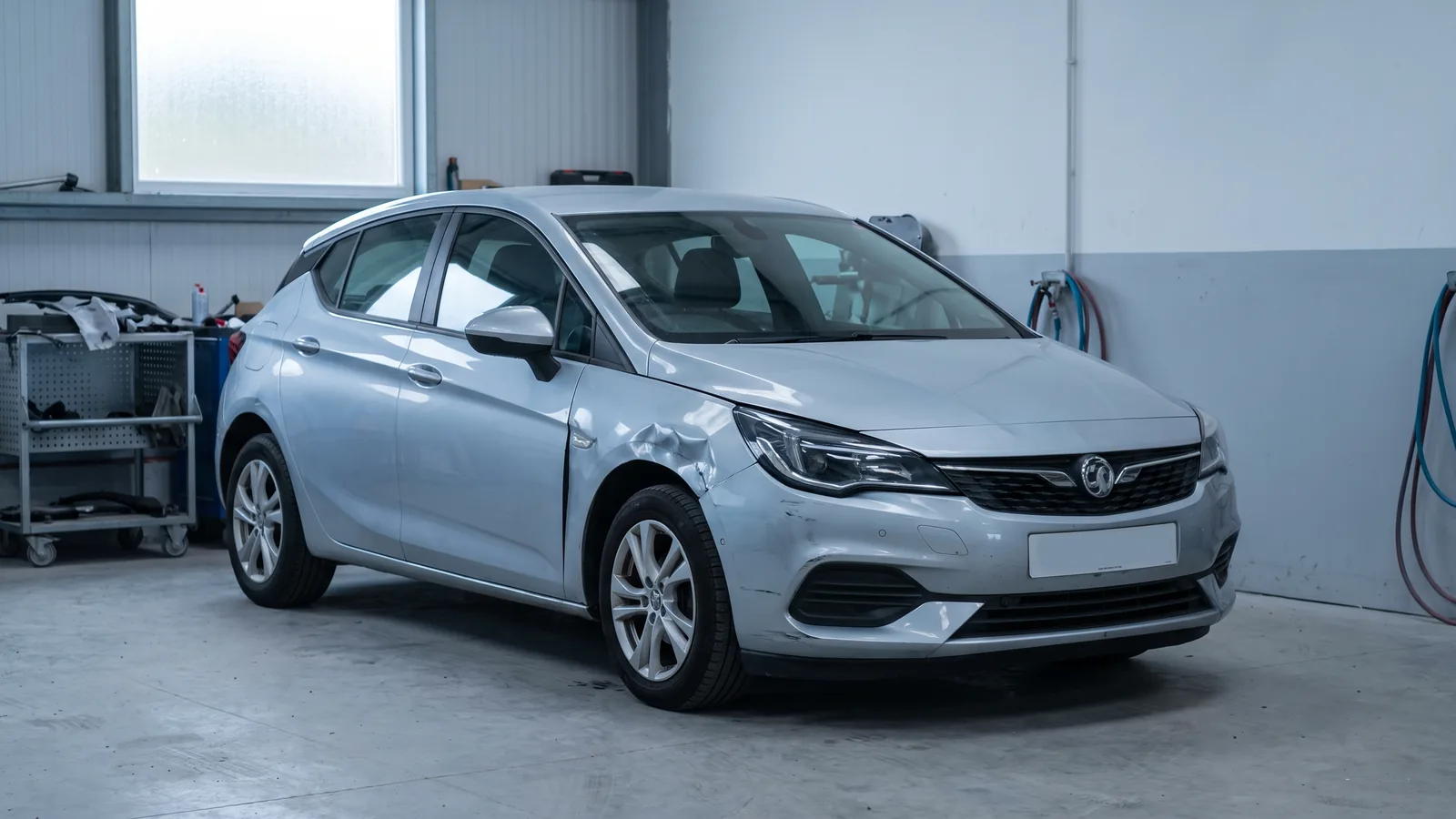
If the accident was not your fault, the at-fault driver’s insurance company pays for your repair. Not you, and not your own insurer. That is what a non-fault claim means in practice: the at fault party pays, the repair costs are recovered from them, and there is no excess for you to find.
That is the short answer. The longer one matters, because many drivers are told exactly that and are then asked for money anyway. What follows is who pays for what after a car accident that was not your fault, in the order the questions usually come up.
Why you might still be asked for your excess
Because it depends which route the claim takes, and the two routes are not the same.
Claim through your own insurer and you pay the excess up front. Your insurance company then tries to recover the costs, including your full excess, from the at-fault driver’s insurer. You get it back when they succeed. That can take months, and it depends on liability being accepted.
Claim directly against the at-fault driver’s insurer and there is no excess at any point. Your own policy is not paying for the repair, so there is nothing to put in and nothing to wait to get back.
Most people are told “non-fault means no excess”, are then asked for several hundred pounds, and reasonably conclude they were misled. They were not. They were put down the first route without anyone explaining there was a second. The repair costs the same either way. The difference is who is out of pocket while it is settled.
The two routes, side by side
| Through your own insurer | Direct with the at-fault insurer | |
|---|---|---|
| Who pays for the repair | Your insurer pays, then recovers the costs | The at-fault driver’s insurance company |
| Your excess | Paid up front, reclaimed later if liability is accepted | Nothing to pay at any stage |
| Your no-claims bonus | At risk until the claim is settled in your favour | Not affected |
| Replacement vehicle | Depends what your policy includes | Like for like while yours is off the road |
| Who chases the other party | Your insurer, on their timescale | Us, on your behalf |
Neither route is a trick. The first exists because it is simple for your insurance company, and if liability is disputed it gets the repair started sooner. The second keeps your policy out of it, which is usually the better outcome when fault is obvious.
What the claims process looks like
The claims process after a non-fault accident runs in roughly this order, whoever is handling it:
- Safety and details first. Make sure nobody is hurt, then gather registrations, insurers and photographs at the scene.
- The accident is reported to the at-fault driver’s insurance company, and a claim is opened against their policy.
- Liability is confirmed. Until the other insurer accepts responsibility, nothing is agreed.
- The vehicle is assessed and the repair costs are agreed before any work starts.
- Recovery and a replacement vehicle are arranged if you need them.
- The repair is carried out, and payment is settled between the repairer and the insurer.
Most of that is phone calls and paperwork. Done on your behalf, it is a service you never really see. Done yourself, it is several weeks of chasing people who are not in a hurry.
Do I have to tell my own insurer?
Yes, and this catches people out. Nearly all insurance policies carry an obligation to report an accident whether or not you intend to claim on it.
Notifying is not the same as claiming. You can tell your insurer what happened, make clear the repair is going through the at-fault party, and leave your own cover untouched. Failing to tell them at all can affect your policy later, so it is not worth the risk.
Will a non-fault claim affect my premium?
It can, even when none of it was your doing. Most insurers price on risk, and a claim on your record is a data point regardless of who caused it. A non-fault claim settled cleanly against the other party usually has far less effect on future premiums than one paid out by your own insurer, which is another argument for keeping your policy out of it.
There is more detail in will a non-fault claim affect my insurance premium.
What else the at-fault insurer should cover
The repair itself is the obvious part. A claim against the at-fault driver’s insurance should also cover the other costs of an accident you did not cause:
- Recovery from the scene, and storage if the vehicle is not driveable
- A replacement vehicle of a similar size and type, for as long as yours is being repaired
- Your excess, if you have already paid one going down the other route
- Out of pocket costs, such as a taxi home from the scene
None of those costs is automatic. Each has to be asked for, documented and chased with the at-fault insurer, which is the part most drivers would rather not take on after a bad week.
What about injuries?
That is a separate matter from the repair. Personal injury claims, including medical expenses and what solicitors call special damages, are handled by a solicitor rather than a repairer, and any compensation for an injured driver or passenger is dealt with on its own track. This page is about the car.
If you were hurt, take advice from someone who does that work. We will not charge you a fee to point you in the right direction.
What if the other driver disputes it?
Then nothing is paid until liability is settled, which is the one situation where going through your own insurance has a real advantage: the repair can start while the two insurers argue, because your insurer covers the cost meanwhile.
That is what your excess is really buying there. You pay it to get the car repaired now rather than in three months, and you get it back if the other insurance company accepts responsibility later.
Evidence shortens the argument. Dashcam footage, photographs, independent witnesses and the police reference number if they attended. Gather it on the day, because an accident nobody documented becomes one word against another.
What if the other driver was uninsured?
You are not stuck. Being hit by an uninsured driver is handled through the Motor Insurers’ Bureau, which exists for exactly this. The process is slower and there is usually an excess involved, which is the main practical difference. Our guide on being hit by an uninsured driver covers what to expect.
What if my car is written off?
Then the at-fault insurer pays its market value rather than a repair bill. Market value means what the car was worth the day before the accident, not what you paid and not what the finance company is owed.
First offers are frequently low. You can challenge a payout with evidence, and advertised prices for the same car at the same age and mileage are the evidence that works. A write-off is still a repair decision in one sense: the insurer has decided the repair costs more than the car is worth, and that calculation is open to question.
Who decides where the car is repaired?
You do. Your insurer can recommend a garage from its own network, but it cannot insist you use one. The decision about who repairs your vehicle stays with you, and it is worth making deliberately rather than accepting the first name you are called with.
There is more on how that works in your right to choose your repairer.
So what does it actually cost you?
On a genuine non-fault claim, handled directly against the at-fault driver’s insurer, nothing. No excess, no contribution to the repair, no charge for the replacement vehicle, and no fee for the claims handling.
That surprises people, so it is worth being plain about where the money comes from. The at-fault driver’s insurance company is liable for the costs their policyholder caused, including the repair. The repairer recovers those costs from that insurance company directly, and the payment never passes through you.
How MSL Customs handles it
We deal with the insurers so you do not have to. That means reporting the accident, getting liability confirmed, arranging recovery and a replacement vehicle, and agreeing the repair costs with the at-fault insurance company before any work starts, so there is no surprise bill at the end.
Your car is repaired to manufacturer specification in our Birmingham workshop and backed by a written guarantee. We have handled accident repair claims with all the major UK insurers, and the standard does not change with who is paying.
If you have had a car accident that was not your fault, tell us what happened and we will take it from there. There is no obligation and no cost for the advice. Or read how non-fault claims work before you decide anything.
Had an accident, or need a repair?